Thursday, August 9, 2012

Don’t Crumple Your Wedding Dress After The Big Day!


The wedding day is over and your wedding dress most likely lie in a crumpled heap on the floor of your honeymoon suite, with mud stains on the hem, foot prints on the train and chocolate mud cake on the bodice.
It is best to have your dress drycleaned within four weeks of the wedding day. If you are heading straight off for an extended honeymoon have one of the bridesmaids or your mum take your wedding dress off to a drycleaner, not just any old drycleaner one that is experienced in drycleaning bridal gowns. Ensure that the drycleaner uses clean fluid and drycleans each wedding dress individually.

Ensure your gown has a care label that provides a viable care method and check with your gown supplier if the gown and trim are dry cleanable. Trims such as beads and artificial pearls may dissolve and other trims may need to be altered or removed so be sure you inspect these with your cleaner in case an alternative method to dry cleaning is necessary.

Once your gown is cleaned, ideally keep it wrapped in the acid free tissue and in the box provided, as this will provide the correct pH environment suited to the delicate fabric. The box should not be air tight as the fabric should be able to breathe and store the box away from heat, humidity and direct sunlight, somewhere cool and dry is ideal.
Some people find that wrapping your dress in a clean white sheet or muslin cloth and storing in a dry, dark and cool place works just as well as acid free paper.

If there is any metal ornamentation on the bridal gown (such as a brooch) it may be wise to remove this before storage so that if the metal tarnishes, it won't transfer to the fabric. It is also recommended to store metal headpieces and jewellery separately from the wedding dress to avoid rust and tarnishes on the dress. 

Do You Ensure Your Wedding Dress Look Good?


The wedding day draws closer and you have picked up your wedding dress - anything that happens now is your responsibility. These no nonsense tips that will ensure your wedding dress will look as good on your wedding day as it did when it left the store!
Before the wedding day
Always ask your wedding dress designer or dressmaker to give you advice on how your wedding dress should be stored over the next few days, weeks, months...
Avoid hanging the gown, especially if it is heavy, as this will cause stress on the seams or cause you fabric to stretch of tear. If your dress is suitable to hang use a good quality hanger, avoid the use of metal hangers.
It is recommended you store your wedding dress in a garment bag in your wardrobe preferably the one you received from the bridal boutique.
Don't store it anywhere damp or where it may come into contact with rats, possums or any other native marsupials and keep it clear from material loving moths.
Keep sharp items away from your gown, which may snag the fabric.
If you prepurchased your wedding dress 6 months or more prior to your wedding day pull it out and try it on again a month before the day.
Does it still fit? It may need alterations. Don't iron your wedding dress!!!! If it needs pressing take it to a professional drycleaner.
Practice makes perfect
Yes, you are allowed one practice (if you dare) before the big day.
Practice putting on the dress, walking, turning, kneeling and moving like you will during the wedding ceremony and wedding reception. Get a feel for how the dress moves and how you handle the train if you have one.
Warning: Do not do this wearing makeup or in the presence of young kids, pets, open fires, any fires, coffees, red wine, soy sauce, food or fiances!!!! Clear the furniture so there is no chance of a snag and do not dress alone...have one of the bridesmaids help you into the wedding dress.
On the wedding day
Avoid wearing a bra before you put on your dress, particularly if you are wearing a strapless style dress. This way you won't leave any strap marks on your shoulders. Similarly, do not wear tight fitting socks that can leave a mark on your ankles.

If the bottoms of your shoes aren't already scuffed or scoured do so now to avoid any slip ups down the aisle! Scuff or scour the bottoms of your shoes on the foot path, or with a knife or sandpaper. Some people recommend spraying hair spray on the bottom of shoes - just ensure that it is hair spray not hair gloss which will have the opposite affect.
When you and your bridesmaids get into your dresses, tuck some tissues under your arms - there will be lots of running around, and no doubt nerves, this will prevent unsightly underarm spots from staing the wedding dress and bridesmaids dresses. Of course, don't forget to remove the tissues just before the ceremony!
Removing stains
A great way to remove make-up from your wedding dress is with a piece of bread! It actually works exceptionally well, you just rub it over the mark & out it comes! Alternatively you can use dressmakers chalk or white chalk.
Bridesmaids are responsible to ensure you and your dress look beautiful throughout the wedding day, ask them to them to check for lippy on the teeth and to re-arrange your veil, wedding gown and anything else that might come unstuck during at the wedding!

Wedding Dress Trains and Bustles: How long you dare to wear?


What transforms a wedding dress is the train and how long you dare to wear it. The length of the train will force you to walk and waltz a little differently, but wearing it will have you feeling like the princess bride as the train gloriously swishes behind you.
You need to consider whether the train will be a separate piece of fabric that is detachable or will it be the same piece of fabric just an extension of your wedding dress. When discussing the length of your train with your wedding dress designer, arm yourself with the necessary language,

Brush or sweep train: The shortest train, just brushing the floor or the tops of your shoes. This works well with a slim fitting wedding dress however this length train won't bustle well so it may become a tripping hazard when you move. Practice walking and moving at home before you walk down the aisle.
Chapel train: This train extends 100cm to 150cm from the waist.
Cathedral train: A longer formal train that is often removed after the wedding ceremony. This train extends approximately two metres from the hemline or three metres from the waist.
Detachable train: Attaches the train to your wedding dress either around the waist or just to one point at the back of the dress. The train can be removed instead of needing to be bustled.
Monarch or royal train: This is the train of princesses and extends three to nine metres in length from the waist
Court or Watteau train: This train attaches at the shoulders, falling loosely into box pleats to the floor and into a sweeping train. Tricky to bustle but very Maid Marian
If you choose a train of heavy fabric, the first thing a bride and her bridesmaids must do is to learn how to bustle the train efficiently and gracefully. If you don't want to bustle your train, then have a detachable train fixed to your wedding dress with buttons, hooks, loops or snaps.
Traditional bustle: The hem is brought up and attached to loops at the back of the dress, creating symmetric layers.
French bustle: Popular during Edwardian and Victorian times, the wedding dress is pulled up and attached by a series of ties at the back of the wedding dress creating a scalloped effect where the bodice meets the skirt.
Wristband bustle: The train is held by a loop at the bottom that attaches like a bracelet around the wrist or index finger. A glamorous bridal look particularly for the bridal waltz.
Floor length bustle: The dress is bustled underneath to create an even hem and the train essentially disappears under the dress.

Gonna Fall In Love With Fabrics and Laces?


Fabrics dictate the flow and style of you wedding dress. Falling in love with a great piece of fabric and making it up in a pattern or design you adore can be disappointing, unless careful thought has gone into the decision of choosing the fabric for the style of gown.
When choosing the fabric for your bridal gown, you can indulge in the luxury and opulence of pure silk or go for the more reasonably priced synthetic versions.
For more fluid or flowing styles, softer or lighter weight fabrics are generally more suitable. Fabrics such as - chiffon, georgette, crepe, charmeuse or silk faille can give a delicate and feminine effect. If the look is more traditional or constructed it may be more appropriate to go for a sturdier weave or a heavier weight fabric, such as - duchess satin, silk duponi or shantung, taffeta, organza or brocade.
The most popular fabrics for dresses are listed below.
Charmeuse: an opaque, lightweight, soft satin that clings to the wearer and is less shiny than regular satin.
Brocade: a patterned fabric (jacquard) with a raised woven design giving an embossed effect to the fabric.
Chiffon: a delicate, transparent fabric with a very soft, feminine finish. This fluid fabric moves with the wearer and drapes well. Perfect as your veil or used in layers over other opaque fabrics. Silk chiffon is the luxury choice, for a more affordable option use the polyester chiffon.
Crepe Back Satin: a light to mid weight fabric with a smooth satin on one side and a crepe weave backing on the other. Ideal for brides seeking a dress with a satin shine.
Crepe: a flowing, sheer fabric with a pebbled texture.
Crepe de Chine: like the crepe back satin, but of a lighter weight and is softer to touch. The fabric has a higher luster than a crepe back satin wedding dress.
Duchesse satin: a blend of silk and rayon that is lighter and less expensive than silk satin. Resists wrinkles well.
Georgette: a sheer, lightweight fabric with a crepe surface.
Organza: flowing yet crisper than chiffon, this fabric is sheer and often used for multitiered skirts.
Silk Mikado: a lusterous, fine woven silk fabric that is heavier than regular silk.
Silk Duponi: a textured fabric is similar to shantung, although the woven nubbly texture is heavier and thicker than that of shantung. This is a beautiful fabric used commonly in wedding gowns.
Satin: a heavier, opaque fabric that is glossy on the front side and dull on the underside.
Shantung: woven to simulate the imperfections found in raw silk. This medium to heavy weight fabric has a homespun, nubbly texture and is lighter in weight than the doupioni. A stunning fabric often used in wedding dresses.
Silk: this fiber, made from the cocoon of silkworms, is luxurious, resilient, and strong.
Taffeta: a wonderfully crisp, smooth fabric that whispers as you move - is shot with a matte and slightly shiny finish. Best suited to fuller skirts with net petticoats.
Tulle: also known as Illusion and is similar to organza however stiffer and coarser. Commonly used in veils and eye catching when layered to form the skirt of a wedding dress. This fabric tears easily so best behaviour please until at least after the cake has been cut.
Velvet: a very soft, luxurious heavy fabric - very elegant and wears well with crepes, satins, furs or shantungs - suitable for winter wedding dresses. A wonderful fabric to use in bridal muffs, shrugs, wraps or as a trim on capes.
Alencon Lace (uh-lon-sahn): a fine French needlepoint lace of flowers and swirls on a sheer net background. The motifs are outlined with a heavier silky cord creating a raised edge. The true french alencon lace has what is know as a beard - a fringe of threads along the edges of the scallops. Less expensive copies don't have the fringe.
Battenberg Lace: a style of renaissance lace on a satin background, usually trimmed with beads, sequins or linen tape to form a clean scalloped edge.
Chantilly Lace: a delicate pattern of scrolls and floral designs on a fine mesh background outlined in a heavy silk thread. This silk is soft to touch.
Guipure Lace: one of the most elegant of all the laces. A heavy, raised lace with an open background usually in large floral leaf patterns. The heavy stitching is embroidered onto paper (aetx cloth) that is dissolved leaving the motifs to stand alone. Also known as Venise lace in the US. Guipure is a versatile popular choice amongst brides. It can be pieced to create a bodice or used in the train.

Must know: Wedding Dress Silhouettes

 A-line wedding dress: An A-line wedding dress is basically just that - an upright letter A.   This style is flared from either the shoulders, the waist or just under the bust and is a very flattering silhouette for just about everyone.
Ball gown wedding dress: The ball gown shaped wedding dress is the classic wedding dress. The bodice is styled as a fitted corset with a basque waistline (shaped in an elongated triangle at the waist) that can sit at your waist or dropped to sit on your hips. The ball gown style has a very full skirt that brushes the floor, reminiscent of Cinderella at the ball. This style of wedding dress will suit brides with small waists.
Empire wedding dress: The empire silhouette has a cropped bodice with a waist seam ending just below the bust line, creating a flattering elongated effect. This style works well for women with larger builds. The empire cut wedding dress will also appear to lengthen your legs and make the bride look slimmer and taller.
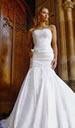
Fishtail/Mermaid wedding dress: This is a body hugging style wedding dress that flares at or just below the knee. This style will show off your curves and looks great on taller brides. Pear-shaped figured brides should avoid this style.
Sheath wedding dress: This is a classical style wedding dress that is narrow and very close fitting. It is an elegant shape reminiscent of an evening gown from the 50's. Many brides find the sheath style wedding dress rather constricting and hard to move in. This style of wedding dress is not suitable for kneeling.
Slip wedding dress: The slip dress is an elegant style that suits tall, slim women. The fabric is usually a silk satin and needs little or no ornamentation. The slip may be backless or cut on the bias with shoestring straps on the shoulders. The slip wedding dress was made popular by Caroline Bissett when she married John Kennedy Jr.

Which Kind Of White Matches You Perfectly?


Wedding dress whites come in many of different shades and some will look better on you than others. Here are the most common shades of wedding dress whites provided by wedding dress plaza.
Diamond white or natural white: This is a soft wedding dress white, found only in the more expensive fabrics such as silk and cotton. This tone of white is well suited to fairer brides.
Champagne or oyster: This wedding dress white is an off-white with pink undertones and will flatter olive or darker skinned brides.
Latte: This wedding dress white is slightly darker than the champagne and oyster shades. This is a popular choice with brides and the tone is perfect for tanned or darker skinned brides.
Stark white or blue white: If you are a blonde or fair skinned person forget it. This shade of white is most unflattering if you are fair. This wedding dress white looks gorgeous on dark skinned brides, particularly hispanic brides.
Ivory or eggshell: Wedding dresses in this shade of white have golden or yellow undertones. This shade of white suits fairer brides.
Adding Colour: As more brides are choosing wedding dresses that are both flattering and fashionable, wedding dress designers, such as Vera Wang are taking inspiration from mainstream fashion for design ideas. A latte coloured satin trim or black velvet ribbons running down the back of a full skirt may put a more modern twist on a traditional wedding dress.
A silk sash or similarly coloured layers below a transparent fabric in this seasons, must have colour is a good idea for brides wanting to add a new dimension of colour to their dress.
And for the small percentage of brides who really don't want to wear white at all, many wedding dress designers will stock wedding dresses in other colours such as ruby red, sapphire blue or solid gold. 

Take A Look: Body Shape And Your Dream Wedding Dress


Your wedding dress should reflect the formality and theme of the wedding in addition to your own sense of style. For brides-to-be, knowing exactly what type of wedding dress suits your body shape and at the same time meets your idea of the dream wedding dress can be a challenge in itself.
Here are some of our typical body shapes with suggestions of wedding dress styles that are designed to flatter your best features.
Hourglass
Pronounced bust, well defined waist, curvy hips and shapely legs - think Marilyn Monroe. A strapless or halter neck wedding dress will suit you perfectly with a fitted body to flatter your feminine curves.
Pear Shaped
Narrow shoulders, small bust, wider hips and full thighs. The stunning and ever fashionable empire line or a-line wedding dress will suit you best.
Athletic
Wide shoulders, medium bust, straight waist and narrow hips. Try on a strapless or shoestring strap wedding dress with a fitted waist. This style is a classic, timeless look - you will adore it!
Round Waist Narrow Hips
Wide neck, full bust, thicker waist. Look for wedding dresses with a lower or sweetheart neckline that will elongate your neck and accentuate your bust. A fitted or drop waist will lengthen your torso, slim your line and make you feel absolutely fabulous.
Straight
Wide shoulders, undefined waist and bottom, average sized bust. If this sounds like you, wedding dresses with an A line shape are ideal as are empire waist styles to soften your form, lengthen your posture and add volume to your behind.
Your budget will help to determine whether you choose to find a couturier, home dressmaker or purchase your wedding dress off-the-rack.
While highlighting your best features and camouflaging your imperfections, make sure that you will feel comfortable and relaxed in whatever style wedding dress you choose.